Key components
(You may already know) Securing your first retail listing requires more than a great product. Retail buyers are looking for brands that understand their customers, fit their category strategy, and have a clear plan to drive sales once on shelf.
This section covers how to identify the right retail partners, build a compelling buyer pitch, demonstrate demand before retail, and tailor your approach for different retail channels.
Whether you're targeting an independent farm shop, a premium retailer, or a national supermarket, the goal is the same: show buyers why your brand deserves a place on their shelves.
1. Retailer Research: Finding the Right Fit
Not every retailer is the right retailer.
A common mistake founders make is pitching too broadly instead of focusing on retailers whose customers, values, and assortment align with their brand.
Before approaching any buyer, ask: Does the retailer align with your brand?
✔ Store Values – Sustainability, wellness, affordability, luxury, innovation?
✔ Target Demographics – Who shops there? Is it price-sensitive or premium-focused?
✔ Product Assortment Gaps – Where does your product fill a need?
Retail Landscape Overview
A common mistake founders make is pitching too broadly instead of focusing on retailers whose customers, values, and assortment align with their brand.
Before approaching any buyer, ask: Does the retailer align with your brand?
✔ Store Values – Sustainability, wellness, affordability, luxury, innovation?
✔ Target Demographics – Who shops there? Is it price-sensitive or premium-focused?
✔ Product Assortment Gaps – Where does your product fill a need?
Retail Landscape Overview
Retail Channel
Examples
Best For
🛒 Supermarkets
Tesco, Sainsbury’s, Asda, Waitrose
Scalable brands with strong supply capability
🌱 Premium & Specialty
Whole Foods Market, Planet Organic, Selfridges, Harrods, Fortnum & Mason, Bayley & Sage
Premium, artisan and challenger brands
💊 Health & Wellness
Holland & Barrett, Boots, Revital
Functional food, supplements, wellness and beauty
🏪 Convenience & Independent
Co-op, Booths, farm shops
Local, emerging and founder-led brands
💄 Beauty & Personal Care
Boots, Superdrug, Sephora, Space NK, Liberty
Skincare, cosmetics, wellness and personal care
📱 Online Retail
Ocado, Zapp, Healf, Beauty Pie, Abel & Cole, GoPuff
Brands building digital demand and awareness
💡 Top Tip:
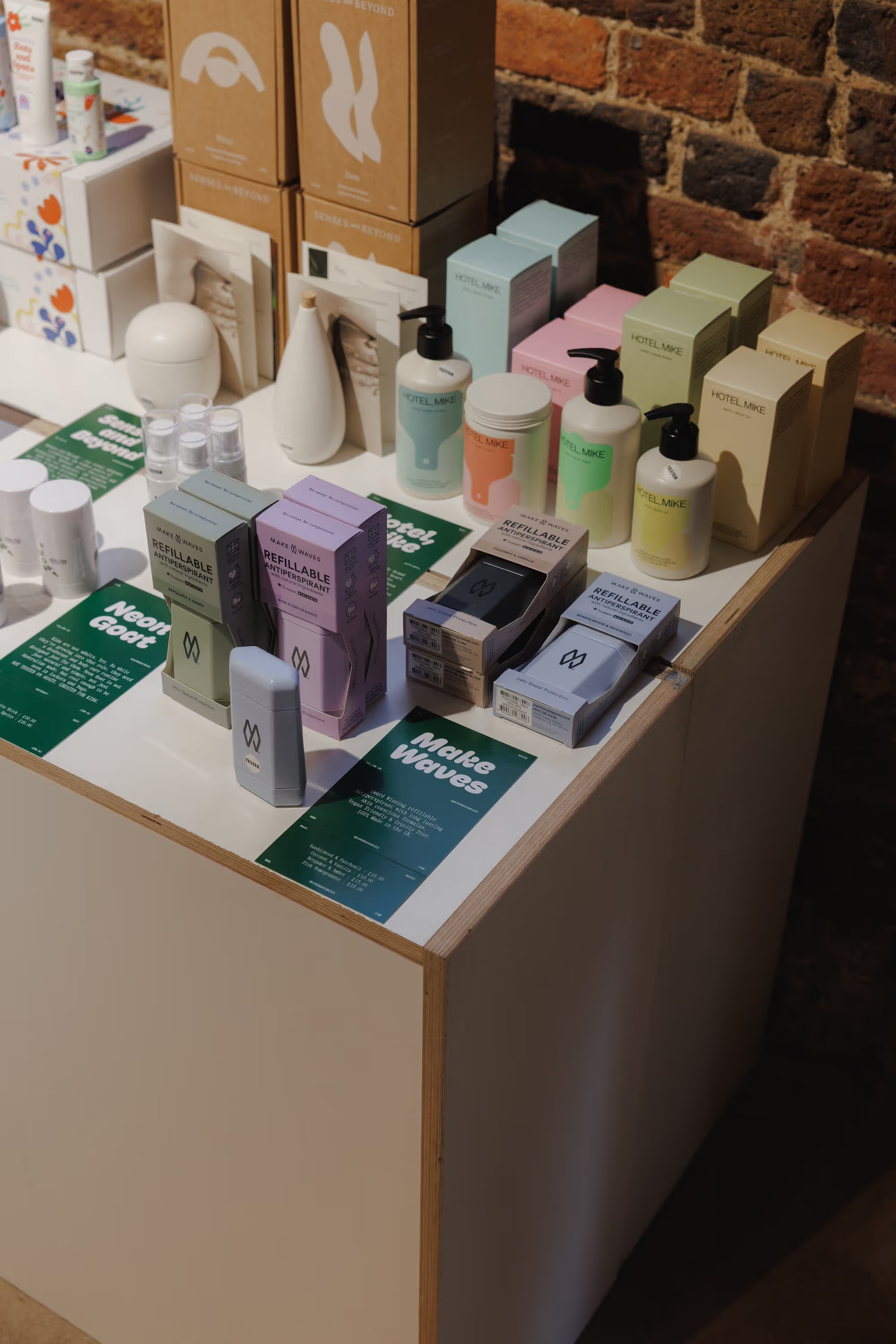
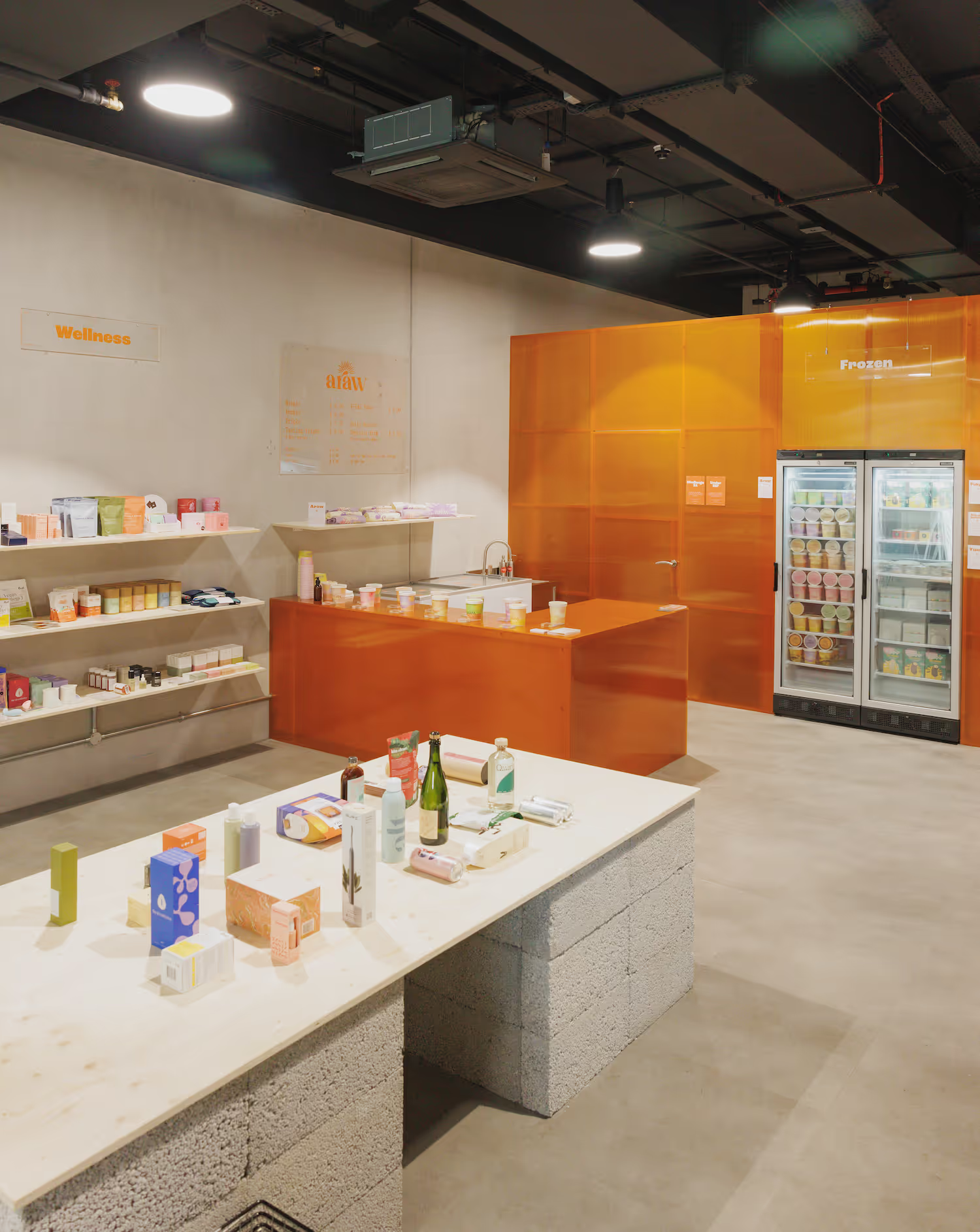
Spend a day visiting stores where you'd love to be stocked.
Take photos.
Place your product on the shelf for visualisation.
Study:
- Shelf positioning
- Competitor pricing
- Packaging
- Promotions
- Range gaps
This research alone can dramatically improve your buyer pitch.
Spend a day visiting stores where you'd love to be stocked.
Take photos.
Place your product on the shelf for visualisation.
Study:
- Shelf positioning
- Competitor pricing
- Packaging
- Promotions
- Range gaps
This research alone can dramatically improve your buyer pitch.
2. Retail Buyer Pitch Deck
Your pitch deck is your first impression with a retail buyer - and often your only chance to clearly communicate why your brand deserves shelf space. It should be concise, visually clear, and tailored to each retailer.
🧩 Key Sections of a Retail Pitch Deck
🧩 Key Sections of a Retail Pitch Deck
Section
What to Include
✨ Brand Story
Founder story, mission, brand purpose, and what makes you different
📈 Market Opportunity
Category growth, consumer trends, and market gaps
🛍 Product Overview
Hero SKUs, pricing, key benefits, and product range
📊 Proof of Demand
DTC sales, reviews, social proof, waitlists, sampling results
🎯 Competitive Positioning
How you compare on price, quality, and differentiation
🚚 Retail Readiness
MOQs, production capacity, packaging, barcodes, logistics setup
📣 Marketing Support
How you’ll drive awareness and in-store sales (social, PR, sampling)
💡 Top Tip:
Keep it short and focused - 8-10 slides maximum. Buyers review dozens of decks, so clarity, relevance, and retailer-specific insight matter more than length or design complexity
3. Proof of Demand
Showing retailers why they should stock you.
Most early-stage brands don't have retail sales data. That's okay.
Buyers simply want confidence that customers are willing to buy your product. If you're an early-stage brand without retail sales, there are still plenty of ways to demonstrate demand and reduce perceived risk.
Examples of proof points include:
🛒 DTC Sales Data: Website sales, repeat purchase rates, subscriptions, best-selling products.
📱 Social Proof: Strong social media following, viral posts, influencer endorsements.
⭐ Consumer Feedback: Reviews, testimonials, ratings, user-generated content
🎪 Market Testing: Pop-ups, markets, sampling events, key collaborations, sell-out rates
📬 Pre-Launch Interest: Waitlists, pre-orders, crowdfunding campaigns
🌟 Industry Visibility: Features on raye the store, press coverage, awards, founder interviews
💡 Top Tip: You don't need major retail listings to secure your first retail account. Focus on demonstrating consumer demand, brand awareness, and a clear plan to drive sales once your product reaches shelves.
4. Tailoring Your Strategy by Retail Channel
Different retail channels have different customer expectations, commercial requirements, and listing criteria. Adapting your pitch, pricing, and marketing support to each retailer can significantly improve your chances of success.
Retail Channel
What Buyers Are Looking For
How to Position Your Brand
🛒 Supermarkets (Tesco, Sainsbury's, Waitrose)
Strong sales potential, competitive pricing, supply chain reliability, nationwide scalability
Focus on category opportunity, consumer demand, operational readiness, promotional plans, and ability to support volume growth.
🌱 Premium & Specialty Retailers (Whole Foods Market, Planet Organic, Selfridges, Harrods, Fortnum & Mason, Bayley & Sage)
Innovation, quality, sustainability, provenance, unique products
Highlight founder story, premium ingredients, ethical sourcing, packaging design, and brand differentiation.
💊 Health & Wellness Retailers (Holland & Barrett, Boots, Revital)
Functional benefits, wellness credentials, consumer education, trusted ingredients
Emphasise scientific backing, certifications, ingredient transparency, health claims compliance, and growing wellness trends.
💄 Beauty & Personal Care Retailers (Boots, Superdrug, Sephora, Space NK, Liberty)
Product efficacy, strong branding, consumer loyalty, innovation
Showcase customer reviews, before-and-after results, influencer engagement, unique formulations, and premium positioning.
🏪 Convenience & Independent Retailers (Co-op, Booths, farm shops, delis, independent stores)
Local relevance, flexibility, artisan appeal, fast-moving products
Focus on local sourcing, founder-led story, smaller MOQs, trial opportunities, and community engagement.
📱 Online Retailers & Marketplaces (Ocado, Healf, Abel & Cole, Amazon, Beauty Pie)
Digital demand, strong content, customer reviews, conversion potential
Demonstrate DTC traction, social proof, SEO-optimised listings, digital marketing support, and influencer partnerships.
💡 Top Tip: Avoid using the same pitch for every retailer. A buyer at Whole Foods Market will assess your brand very differently from a buyer at Tesco or Boots. Tailoring your proposition to each channel demonstrates that you understand their customers, category strategy, and commercial priorities.
💬 From the voices behind the contents
"Freestanding Display Units (FSDUs) can help secure listings in saturated categories or where shelf space is limited, particularly for new or innovative products - but they may be temporary in nature."
"Consider phased rollouts in national multiples (e.g. 50 -100 stores at a time) to make scaling more manageable operationally and financially."
"Freestanding Display Units (FSDUs) can help secure listings in saturated categories or where shelf space is limited, particularly for new or innovative products - but they may be temporary in nature."
"Consider phased rollouts in national multiples (e.g. 50 -100 stores at a time) to make scaling more manageable operationally and financially."
Final Takeaways
🎯 Research retailers before pitching and focus on those that genuinely fit your brand.
📑 Create a concise, retailer-specific pitch deck that demonstrates both demand and operational readiness
📊 Use DTC sales, reviews, social proof, events, and customer feedback as proof of demand if you're pre-retail.
🛍 Tailor your messaging, pricing, and promotional strategy for each retail channel.
🤝 Consider working with specialist retail advisors or sales partners to strengthen your route to market.
💡 Remember: buyers don't just buy products - they buy confidence that a brand can succeed on their shelves.
📑 Create a concise, retailer-specific pitch deck that demonstrates both demand and operational readiness
📊 Use DTC sales, reviews, social proof, events, and customer feedback as proof of demand if you're pre-retail.
🛍 Tailor your messaging, pricing, and promotional strategy for each retail channel.
🤝 Consider working with specialist retail advisors or sales partners to strengthen your route to market.
💡 Remember: buyers don't just buy products - they buy confidence that a brand can succeed on their shelves.