Key components
Building a successful retail presence rarely happens overnight. Retail outreach is often a long-term process of building awareness, developing relationships, gathering feedback, and creating opportunities that eventually lead to listings.
For early-stage brands, success should not be measured solely by the number of retailers contacted, but by the quality of relationships being built and the insights gained along the way.
This section focuses on creating a structured and repeatable approach to retail outreach, helping you stay organised, visible, and proactive as you prepare for retail growth.
🎯 1. Identify Your Target Retailers
- Conduct thorough market research to identify target retailers and understand consumer preferences.
- Analyse competitor performance and market trends.
- Use data from market reports, retailer insights, and customer surveys to inform decisions.
- Analyse competitor performance and market trends.
- Use data from market reports, retailer insights, and customer surveys to inform decisions.
Retailer Channel
Examples
Best For
🛒 Supermarkets
Tesco, Sainsbury's, M&S, Asda, Waitrose
Scalable brands with established supply chains
🌱 Premium & Specialty
Whole Foods Market, Planet Organic, Selfridges, Fortnum & Mason
Premium, organic and challenger brands
💊 Health & Wellness
Holland & Barrett, Boots, Revital
Wellness, supplements and functional products
🏪 Independent Retail
Co-op, Booths, farm shops, delis, independents
Emerging and local brands
💄 Beauty Retail
Boots, Superdrug, Sephora, Space NK, Liberty
Beauty and personal care brands
📱 Online Retail
Ocado, Zapp, Healf, Beauty Pie, Abel & Cole
Digital-first and discovery brands
💡 Top Tip:
Start with retailers that align with your current stage rather than targeting national supermarket listings immediately.
💬 From the Voices Behind the Contents
“Securing access to retailer data is critical; where possible, it should be included in negotiations upfront, as it is significantly harder to obtain later.”
"Payment terms (Net 30, Net 60, or longer) should always be treated as a key commercial negotiation point, not a fixed assumption.""Independents vs majors: not all retailers are equally relevant for every brand, and channel fit matters more than scale alone."
Start with retailers that align with your current stage rather than targeting national supermarket listings immediately.
💬 From the Voices Behind the Contents
“Securing access to retailer data is critical; where possible, it should be included in negotiations upfront, as it is significantly harder to obtain later.”
"Payment terms (Net 30, Net 60, or longer) should always be treated as a key commercial negotiation point, not a fixed assumption.""Independents vs majors: not all retailers are equally relevant for every brand, and channel fit matters more than scale alone."
💬 From the Buyer Voices
"Retailers are very focused on category performance and buyers think in categories. It's about what role your brand is going to play in a category that isn't already being fulfilled - that's how brands speak the buyer's language."
"Retailers are very focused on category performance and buyers think in categories. It's about what role your brand is going to play in a category that isn't already being fulfilled - that's how brands speak the buyer's language."
2. Build Your Retail Contact List
Once you've identified target retailers, research the relevant buyers and category managers
Create a simple outreach tracker including:
- Retailer name
- Buyer/category contact
- Product category
- Contact details
- Outreach status
- Follow-up dates
- Meeting notes
Where to Identify Contacts
🔍 LinkedIn
🎪 Industry events
📧 Retailer supplier portals
🤝 Distributor introductions
🌟 Industry networks and communities
❤️ Post raye the store Showcase Performance Report
Create a simple outreach tracker including:
- Retailer name
- Buyer/category contact
- Product category
- Contact details
- Outreach status
- Follow-up dates
- Meeting notes
Where to Identify Contacts
🎪 Industry events
📧 Retailer supplier portals
🤝 Distributor introductions
🌟 Industry networks and communities
❤️ Post raye the store Showcase Performance Report
💬 From the Buyer Voices
"Ultimately, a buyer has to take something off the shelf to fit you in. It's a space game, and it needs justifying. That's why it's so important to demonstrate not only that your product is great, but that it will drive sales, attract shoppers, or bring something genuinely new to the category.’"
"Ultimately, a buyer has to take something off the shelf to fit you in. It's a space game, and it needs justifying. That's why it's so important to demonstrate not only that your product is great, but that it will drive sales, attract shoppers, or bring something genuinely new to the category.’"
3. Define Your Retail Proposition
When contacting buyers, be clear on why your product deserves shelf space.
Prepare:
✔ Retail pitch deck
✔ Product samples
✔ Pricing and margin structure
✔ Brand story
✔ Certifications and accreditations
✔ Marketing support plans
✔ Operational readiness information
Your goal is to clearly communicate:
Why this product?
Why now?
Why this retailer?
Proof Points
Even without retail listings, you can demonstrate demand through:
📊 DTC sales
⭐ Customer reviews
📱 Social engagement
🎪 Events and sampling
📬 Waitlists and pre-orders
🌟 Industry features and showcases
🛒 Category Thinking: Speak the Buyer's Language
One of the biggest mindset shifts when preparing for retail is understanding that buyers rarely think about individual products - they think about categories.
When a buyer considers listing a new brand, they are asking:
✔ Will this grow the category?
✔ Will it bring new shoppers into the aisle?
✔ Will it increase basket spend?
✔ Does it fill a gap in the current range?
✔ Is it incremental or simply replacing an existing product?
Remember: for your product to gain shelf space, something else may need to lose it.
This means your pitch should focus not only on your brand, but on the value you bring to the retailer's category strategy.
Questions to consider
- What unmet consumer need does your product address?
- How is your proposition different from existing products on shelf?
- Does your brand attract a new shopper demographic?
- Can it encourage higher spend or increased purchase frequency?
- Does it align with emerging consumer trends?
Here are some examples of category value
📈 Bringing new consumers into the category
🛒 Increasing basket spend through premiumisation
🌱 Meeting growing demand for health, wellness, sustainability, or convenience
✨ Introducing innovation not currently represented on shelf
🎯 Creating a point of differentiation from competitors
💡 Top Tip:
The strongest retail pitches don't just explain why consumers will love your product - they explain why retailers will benefit from stocking it.
Prepare:
✔ Retail pitch deck
✔ Product samples
✔ Pricing and margin structure
✔ Brand story
✔ Certifications and accreditations
✔ Marketing support plans
✔ Operational readiness information
Your goal is to clearly communicate:
Why this product?
Why now?
Why this retailer?
Proof Points
Even without retail listings, you can demonstrate demand through:
📊 DTC sales
⭐ Customer reviews
📱 Social engagement
🎪 Events and sampling
📬 Waitlists and pre-orders
🌟 Industry features and showcases
🛒 Category Thinking: Speak the Buyer's Language
One of the biggest mindset shifts when preparing for retail is understanding that buyers rarely think about individual products - they think about categories.
When a buyer considers listing a new brand, they are asking:
✔ Will this grow the category?
✔ Will it bring new shoppers into the aisle?
✔ Will it increase basket spend?
✔ Does it fill a gap in the current range?
✔ Is it incremental or simply replacing an existing product?
Remember: for your product to gain shelf space, something else may need to lose it.
This means your pitch should focus not only on your brand, but on the value you bring to the retailer's category strategy.
Questions to consider
- What unmet consumer need does your product address?
- How is your proposition different from existing products on shelf?
- Does your brand attract a new shopper demographic?
- Can it encourage higher spend or increased purchase frequency?
- Does it align with emerging consumer trends?
Here are some examples of category value
📈 Bringing new consumers into the category
🛒 Increasing basket spend through premiumisation
🌱 Meeting growing demand for health, wellness, sustainability, or convenience
✨ Introducing innovation not currently represented on shelf
🎯 Creating a point of differentiation from competitors
💡 Top Tip:
The strongest retail pitches don't just explain why consumers will love your product - they explain why retailers will benefit from stocking it.
📣 4. Outreach & Relationship Building
Retail outreach is rarely a one-touch process.
Successful brands combine multiple touchpoints over time to build awareness and credibility.
Successful brands combine multiple touchpoints over time to build awareness and credibility.
Channel
Purpose
📧 Email
Initial introduction and pitch
📞 Video / Phone
Follow-up conversations
🛍 Brand Showcases
Product discovery and sampling opportunities
💼 LinkedIn
Relationship building and networking
📦 Product Samples
Allow buyers to experience the product firsthand
💡 Top Tip
Persistence matters. Many retail relationships are built through multiple interactions over several months rather than a single successful pitch.
💬 From the Voices Behind the Contents
“Securing access to retailer data is critical; where possible, it should be included in negotiations upfront, as it is significantly harder to obtain later.”
"Payment terms (Net 30, Net 60, or longer) should always be treated as a key commercial negotiation point, not a fixed assumption."
"Expectations around lead time vary significantly; in some cases, 3–5 years from first contact to listing is not uncommon, and brands should plan accordingly."
🌟 Leverage Discovery Platforms & Industry Networks
For emerging brands, visibility can help open doors before formal buyer conversations begin.
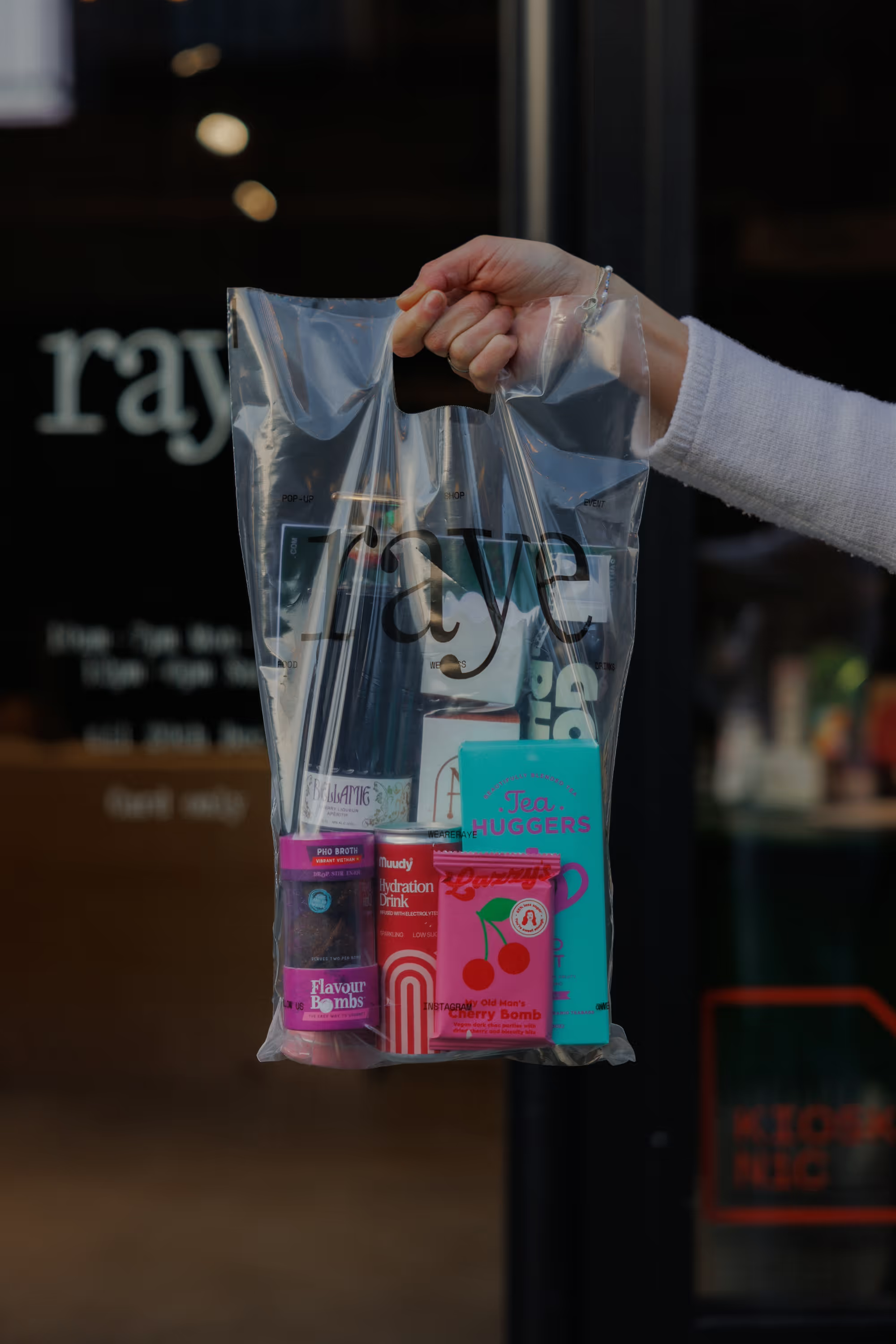
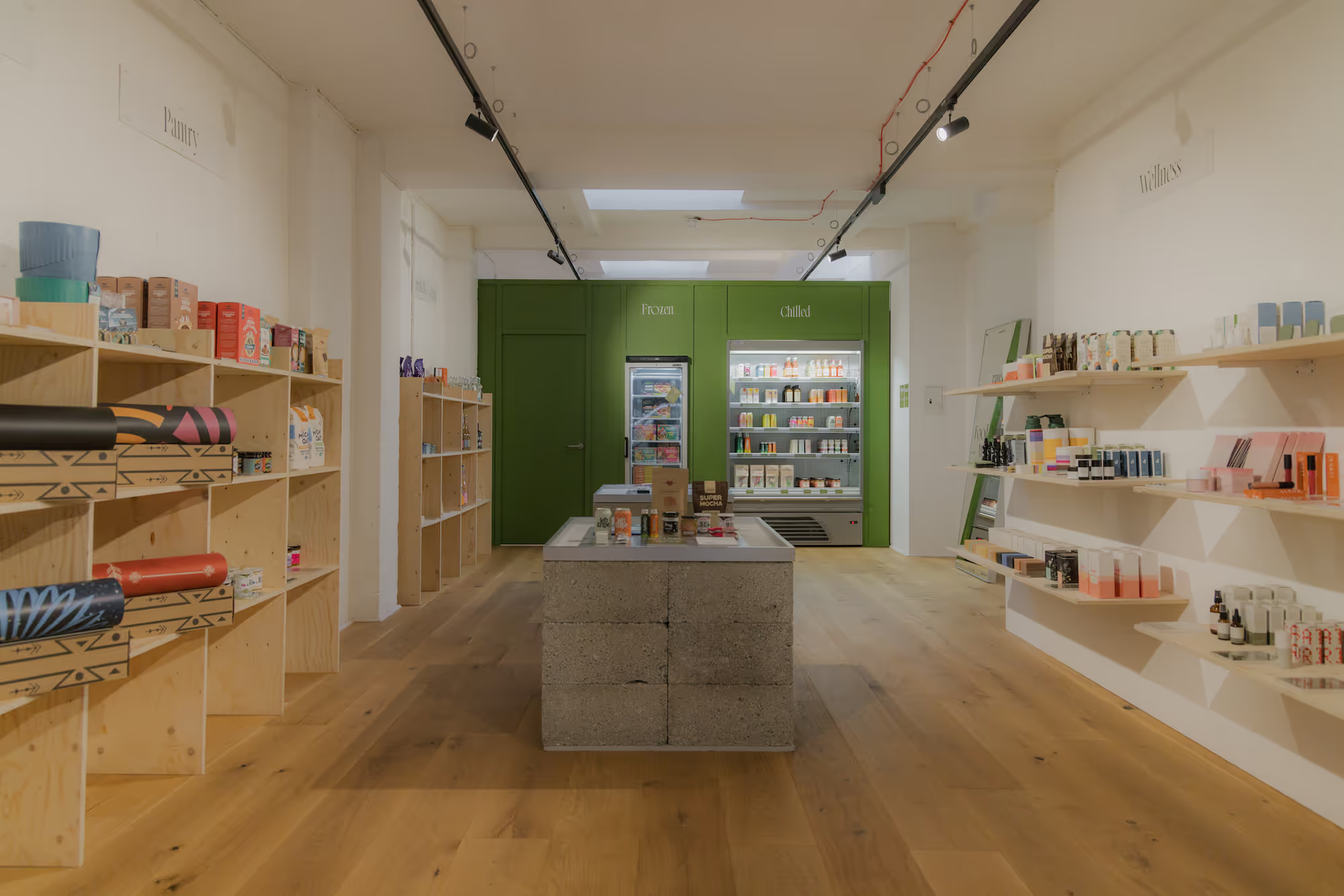
Platforms such as raye the store provide opportunities for brands to showcase products to consumers while also increasing exposure among buyers, distributors, investors, and industry professionals actively seeking new brands and category innovation.
Participation in showcases, founder features, events, and industry initiatives can help build credibility and create valuable retail connections.
5. Support Retailers After Listing
🤝 Securing a listing is only the beginning.
Retailers are continually assessing category performance, shopper demand, and shelf productivity.
Brands that actively support sell-through and maintain strong communication are more likely to secure long-term listings and future opportunities.
Ways to Support Retailers within your available budget.
✔ Sampling activations
✔ Social media campaigns
✔ Influencer partnerships
✔ In-store promotions
✔ Point-of-sale materials
✔ Store staff education
✔ Community and event partnerships
6. Gather Feedback & Improve Your Approach
Not every retailer, buyer, or outreach approach will be successful (or immediately reply after the first time you reach out).
Use every conversation as a learning opportunity.
Regularly Review
- Buyer feedback
- Common objections
- Pricing questions
- Product positioning
- Retailer fit
- Outreach effectiveness
Small improvements over time can significantly increase your chances of securing future listings.
✅ Retail Outreach Checklist
Before contacting retailers, ensure you have:
☐ Defined target retailers
☐ Built a buyer contact list
☐ Retail pitch deck prepared
☐ Product samples ready
☐ Pricing and margin structure confirmed
☐ Marketing support plan developed
☐ Certifications and compliance requirements understood
☐ Follow-up process in place
Early-stage brands often focus only on listings, but there are many indicators that show progress is being made.
Remember
A retailer who isn't ready today may become an opportunity in the future. Consistent outreach creates future opportunities.
Retail outreach flow.
Use every conversation as a learning opportunity.
Regularly Review
- Buyer feedback
- Common objections
- Pricing questions
- Product positioning
- Retailer fit
- Outreach effectiveness
Small improvements over time can significantly increase your chances of securing future listings.
✅ Retail Outreach Checklist
Before contacting retailers, ensure you have:
☐ Defined target retailers
☐ Built a buyer contact list
☐ Retail pitch deck prepared
☐ Product samples ready
☐ Pricing and margin structure confirmed
☐ Marketing support plan developed
☐ Certifications and compliance requirements understood
☐ Follow-up process in place
Early-stage brands often focus only on listings, but there are many indicators that show progress is being made.
Remember
A retailer who isn't ready today may become an opportunity in the future. Consistent outreach creates future opportunities.
7. Maintaining Listings & Building Long-Term Retail Relationships
Securing a listing is a major milestone, but retaining shelf space is where long-term retail success is built.
Retail buyers are ultimately responsible for category performance, meaning they constantly assess which products are delivering value to shoppers and contributing to category growth. Winning a listing gets your product onto the shelf; maintaining strong performance helps keep it there.
Think Like a Category Manager
Retail buyers don't manage individual brands - they manage categories.
As your retail presence grows, continue asking:
✔ Is my product driving incremental sales?
✔ Am I attracting new shoppers into the category?
✔ Am I increasing basket spend?
✔ Am I filling a genuine gap in the range?
✔ How does my brand contribute to overall category growth?
The more you understand your retailer's category objectives, the more valuable you become as a supplier partner.
Support Category Performance
Once listed, focus on helping retailers achieve strong results.
Ways to support performance include:
📣 Driving awareness through social media and PR
🎪 Running sampling and trial campaigns
🏷 Participating in promotional activity
📱 Encouraging shoppers to visit retail partners
🛍 Supporting seasonal campaigns and retailer initiatives
🚀 Bringing innovation and new product development opportunities
Build Strong Buyer Relationships
The strongest retail partnerships are collaborative rather than transactional.
Maintain regular communication with buyers by:
✔ Sharing brand updates and milestones
✔ Providing customer feedback and insights
✔ Being proactive when challenges arise
✔ Responding quickly to retailer requests
✔ Bringing ideas that support category growth
📢 Use Feedback to Improve
[more on this in the next and final Module]
Retail feedback can provide valuable insights into how your products are performing and where opportunities exist.
Review:
- Consumer feedback
- Retailer feedback
- Sales performance (where available)
- Promotional effectiveness
- Product range opportunities
- Packaging and merchandising considerations
💡 Top Tip
A listing should never be viewed as the finish line. Retailers regularly review category performance and shelf productivity. Brands that actively support sales, contribute category insights, and work collaboratively with buyers are far more likely to secure long-term listings and future growth opportunities.
💬 From the Voices Behind the Contents
"Use interest or traction from secondary or less preferred retailers as leverage when negotiating with priority retail targets."
"The listing you expect to be most impactful is not always the one that drives the strongest results - remain open and responsive to real-world performance."
Final Takeaways
🎯 Focus on retailers that align with your brand and current stage of growth.
👥 Build relationships before you need listings.
✨ Clearly communicate why your product belongs in a retailer's assortment.
📣 Use multiple outreach channels and follow up consistently.
🌟 Leverage platforms like raye the store to increase visibility and credibility.
🤝 Remember that successful retail partnerships are built through long-term relationships, not one-off sales conversations.
👥 Build relationships before you need listings.
✨ Clearly communicate why your product belongs in a retailer's assortment.
📣 Use multiple outreach channels and follow up consistently.
🌟 Leverage platforms like raye the store to increase visibility and credibility.
🤝 Remember that successful retail partnerships are built through long-term relationships, not one-off sales conversations.
💬 From the Buyer Voices
"‘Retailers are very focused on category performance and buyers think in categories. It's about what role your brand is going to play in a category that isn't already being fulfilled - that's how brands speak the buyer's language."
"‘Retailers are very focused on category performance and buyers think in categories. It's about what role your brand is going to play in a category that isn't already being fulfilled - that's how brands speak the buyer's language."